
Inside the L6 Build: Eight Manufacturing Stages and What to Ask
Follow the L6RPTKFS-LA manufacturing film and use eight practical questions to discuss cabinet construction, assembly, testing and packaging.
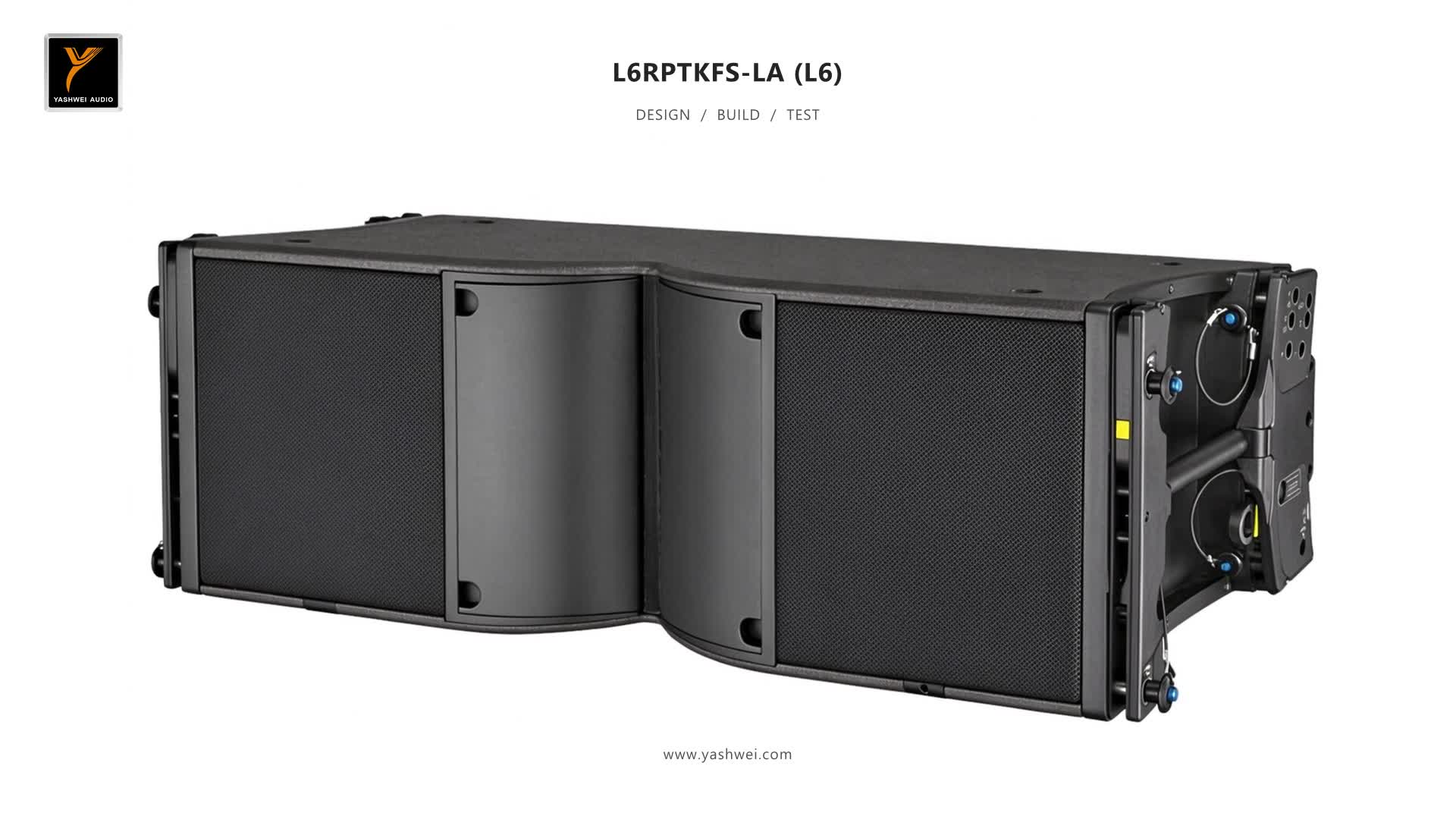
A manufacturing film is most useful when it helps a buyer ask better questions. The YASHWEI L6RPTKFS-LA film follows a loudspeaker from cabinet design to protective packaging. This guide explains the eight chapter groups and suggests what to discuss when evaluating a manufacturing partner.
Watch the English L6 manufacturing film to see the operations described below. Times are rounded to the chapter labels in the player. The footage documents this build; it is not a specification sheet or a published quality-test report.
00:04 — Cabinet design
The opening design sequence shows the cabinet being developed in a 3D design environment. For a buyer, the useful follow-up is how the intended application becomes an agreed cabinet layout and product specification. Ask which drawing revision forms the production baseline and how changes are communicated.
00:11 — Cabinet machining
The film moves to machining the cabinet panels. Ask how the machining files relate to the approved drawing and what information will be retained when a design changes. A visually tidy panel is useful evidence of a process step, but dimensional tolerances need their own agreed documentation.
00:19 — Cabinet assembly
The cabinet takes shape as panels are joined and secured. This is the stage to discuss construction details and consistency between batches. If your project requires a particular material or build method, put it in the agreed specification instead of relying on an image to identify it.
00:31 — Surface preparation
Surfaces and joints are prepared before coating. Ask which finish is intended for your handling conditions and how its appearance will be agreed. A touring cabinet may face different handling demands from an installed system, so the intended use belongs in the conversation from the beginning.
00:37 — Spray coating
The spray sequence shows the cabinet receiving its finish. Ask about the specified coating and the finish sample used for comparison. Colour, texture and repair expectations should be defined where they matter. The video alone does not establish chemical properties, environmental certification or a weather-resistance rating.
00:41 — Loudspeaker assembly
This chapter groups several operations: fitting internal components, adding acoustic damping material, connecting wiring, installing drivers and completing assembly. Ask how the approved component list is controlled and how substitutions are handled. For an OEM/ODM project, agree the treatment of labels, branding, connectors and service access in the product documentation.
01:09 — Testing and adjustment
The assembled loudspeaker is prepared for measurement and adjustment. Ask which test method applies to the product, what constitutes acceptance and what records can accompany an order. A screen showing a measurement is evidence that measurement is taking place; numerical limits, sample rates and pass/fail policies must be confirmed separately.
01:25 — Protective packaging
The final sequence shows the product being packed and boxed. Discuss the shipment method, handling, storage and unpacking process before specifying packaging. If a transport test or special label is required, define it as an order requirement rather than assuming every package follows the same test programme.
Use the process to support a system decision
Manufacturing capability matters alongside suitability for the application. Begin with audience coverage, programme material and deployment constraints. Then discuss the proposed loudspeakers, amplification, processing and practical delivery requirements as a system.
Continue through Applications, explore the published line array range, or discuss OEM/ODM requirements. The L6 film is a manufacturing case study; use the currently published model pages and confirmed engineering documents for product selection.
Source: YASHWEI L6 manufacturing film. Prepared with AI-assisted writing using the published film and its English process descriptions. No additional performance figures or certifications are inferred from the footage.